LANAP vs. Deep Cleaning: Which is Right for Your Gum Health?
When you’re diagnosed with gum disease (periodontitis), your dentist or periodontist will likely recommend a procedure to clean below the gumline and stop the progression of the disease. Historically, the gold standard has been a traditional deep cleaning (scaling and root planing). However, in recent years, a newer, laser-based alternative known as LANAP (Laser-Assisted New Attachment Procedure) has emerged as a highly effective option. If you’re weighing LANAP vs. deep cleaning, it’s crucial to understand the differences, benefits, and drawbacks of each to make an informed decision for your oral health.
Table of Contents
ToggleWhat is Traditional Deep Cleaning (Scaling and Root Planing)?
A traditional deep cleaning, medically known as scaling and root planing (SRP), is a non-surgical procedure performed by a dental hygienist or periodontist. It involves two main steps:
- Scaling: Using specialized metal hand instruments and ultrasonic scalers, the practitioner meticulously scrapes away plaque and tartar (calculus) buildup from the tooth’s surface and deep within the periodontal pockets (the spaces between the gums and the teeth).
- Root Planing: The practitioner then smooths the roots of the teeth. This smoothing process removes bacterial toxins and makes it harder for plaque and tartar to re-adhere, allowing the gums to reattach more firmly to the teeth.
Traditional deep cleanings usually require local anesthesia to numb the gums, and the process is typically divided into two to four appointments, focusing on different quadrants of the mouth.
What is LANAP (Laser Dentistry)?
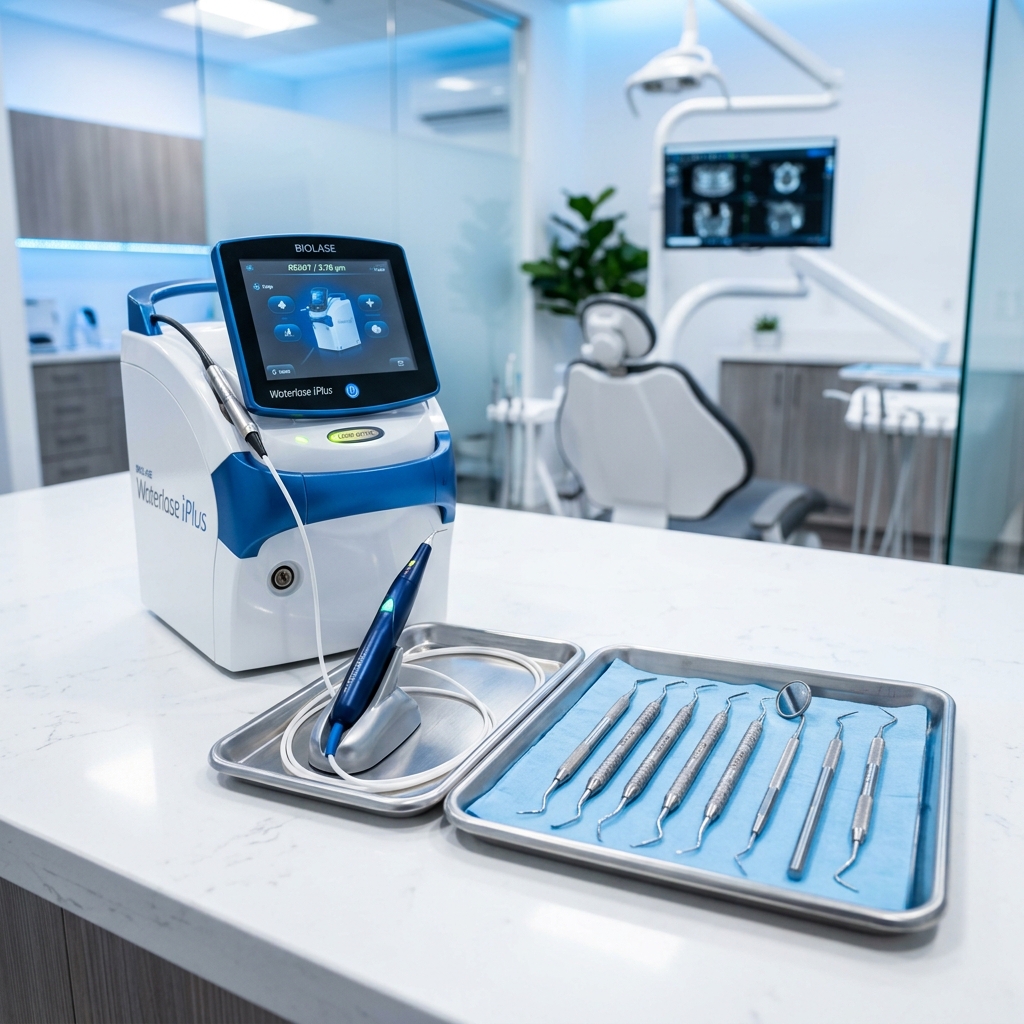
LANAP stands for Laser-Assisted New Attachment Procedure. It is a patented, FDA-cleared protocol that utilizes a specific type of laser—the PerioLase MVP-7—to treat severe gum disease without the need for scalpels or sutures.
During LANAP, the practitioner uses a tiny laser fiber (about the thickness of three human hairs) inserted between the tooth and the gum. The laser is calibrated to target and vaporize ONLY diseased, infected tissue and bacteria, leaving the healthy gum tissue completely intact. After the infection is cleared, ultrasonic scalers are used to remove tartar from the root surface. Finally, the laser is passed over the area again to create a firm blood clot, sealing the pocket and promoting natural healing and bone regeneration.
LANAP vs. Deep Cleaning: The Key Differences
While both procedures aim to eradicate gum disease and save your natural teeth, their approaches and patient experiences differ significantly.
1. Pain and Discomfort
Deep Cleaning: Because it involves mechanical scraping beneath the gumline, SRP can cause mild to moderate discomfort during the procedure (which is why local anesthesia is used) and soreness, swelling, and bleeding for several days afterward.
LANAP: LANAP is famous for being a minimally invasive procedure. The laser only targets diseased tissue, meaning there is no cutting or sewing. Patients generally experience significantly less pain, less bleeding, and virtually no post-operative swelling compared to traditional methods.
2. Recovery Time
Deep Cleaning: Recovery from traditional SRP can take a few days to a week. Patients may need to stick to a soft diet and take over-the-counter pain relievers while their gums heal and reattach.
LANAP: Recovery is exceptionally fast. Most patients can return to work and their normal daily activities immediately after the procedure. The laser cauterizes as it works, creating an instant seal that accelerates healing.
3. Gum Recession and Tooth Sensitivity
Deep Cleaning: As the gums heal and inflammation subsides after a deep cleaning, some gum recession is common. This can expose the roots of the teeth, leading to temporary or permanent tooth sensitivity to hot and cold temperatures.
LANAP: Because LANAP preserves the healthy gum tissue and does not lower the gumline with a scalpel, the risk of gum recession is drastically reduced. Consequently, patients experience much less post-operative tooth sensitivity.
4. Bone Regeneration
Deep Cleaning: SRP is highly effective at stopping the progression of bone loss caused by periodontal disease, but it does not actively promote the regrowth of lost bone.
LANAP: One of the most significant advantages of LANAP is that it is the only laser gum disease treatment scientifically proven and FDA-cleared to promote the regeneration of lost bone and tissue around the teeth.
Which Procedure is Right for You?
The choice between LANAP vs. deep cleaning depends on several factors, including the severity of your gum disease, your pain tolerance, your budget, and the technology available at your dental practice.
- Choose Deep Cleaning if: You have mild to moderate early-stage gum disease (gingivitis or early periodontitis), you are on a strict budget, and your dental insurance provides better coverage for traditional methods.
- Choose LANAP if: You have moderate to severe periodontitis, you suffer from dental anxiety and fear of pain, you want the fastest possible recovery time, or you have already experienced bone loss and want to promote regeneration.
Conclusion
Both LANAP and traditional deep cleanings are effective weapons against gum disease. However, LANAP represents a significant leap forward in patient comfort, safety, and long-term results. By utilizing advanced laser technology, LANAP offers a less painful, faster-healing alternative that actively regenerates lost bone. If you are facing a diagnosis of gum disease, it is well worth discussing both options with your periodontist to determine the best path toward a healthy, lasting smile.
Do you suspect you might need a deep cleaning or want to learn more about our advanced laser treatments? Contact our office to schedule a comprehensive periodontal evaluation today. [contact_form]
Get our latest guides, news, and insights highlighted in your Google Search & AI Overviews.