⏳ Quick Answer: What To Do
I hit my tooth really hard will it fall out? Not necessarily, but it is a Dental Emergency that requires immediate action to save the tooth. If the tooth is loose, do not wiggle it, as this worsens the damage to the Periodontal ligament. For a completely knocked out tooth (avulsed tooth), you have a critical 30-60 minute golden window for successful re-implantation. Store it in milk or saliva (never water) and seek an emergency dentist immediately. Note: Never try to re-implant a Primary Tooth (Baby Tooth), as it can permanently damage the developing Permanent Tooth.
Assessing the Extent of Dental Trauma
When you experience dental trauma, the visible damage is only half the story. Internal tooth damage can be severe. In clinical terms, a tooth concussion means the tooth was hit but isn’t loose, while a tooth subluxation means it is loose but not displaced. True tooth luxation involves displacement, and an avulsion means the tooth is completely knocked out.
Impact can sever the blood supply and damage the Tooth Pulp (Nerve). This nerve damage (pulp necrosis) might not show symptoms immediately. Delayed symptoms might appear weeks or months later, marked by the tooth turning dark or gray—a classic sign of a dead tooth. An Endodontist will perform pulp vitality testing and use CBCT Imaging (3D scans) to uncover hidden issues like a cracked tooth root that standard X-rays often miss.
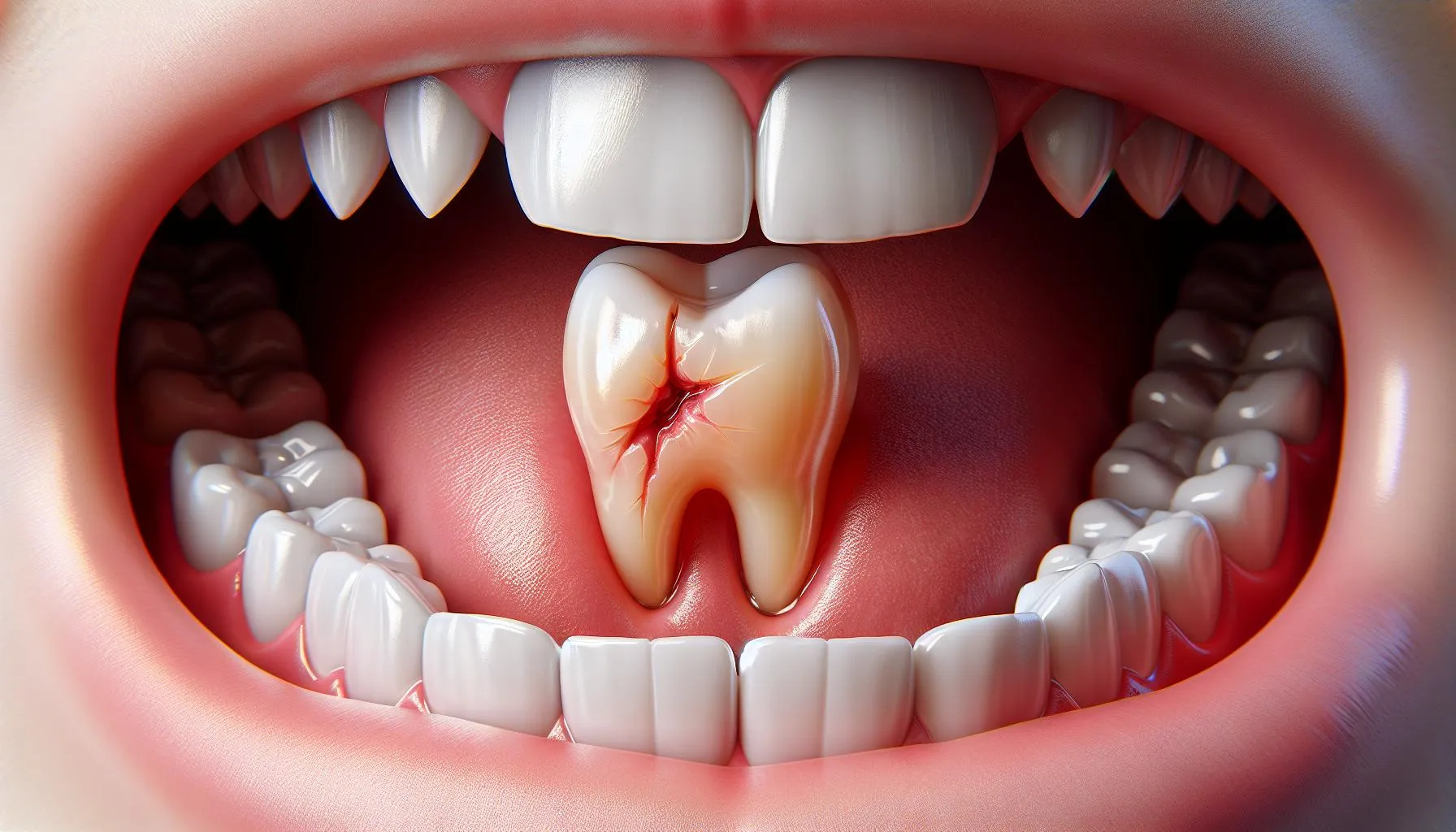

Immediate Actions to Save Your Tooth
If you have a knocked out Permanent Tooth, pick it up by the crown—never the root. Rinse it gently with milk or saline if dirty, and try to place it back into the socket. If it won’t go in, store it in milk or saliva. Using plain water will cause the root cells to burst.
If the tooth is simply loose, a dentist will use tooth splinting (Dental Splinting) to secure it to adjacent healthy teeth, allowing the periodontal ligaments to heal properly. For a tooth with irreversible nerve damage, Root Canal Therapy will be necessary to save the remaining structure and prevent dangerous infections.
Why You Must Monitor Symptoms
Even if your tooth feels fine right after the impact, the delayed consequences of untreated trauma can lead to tooth loss. Monitoring for color changes and scheduling an evaluation is critical. A minor concussion today could silently develop into an abscess tomorrow without proper clinical assessment and endodontic care.
Trauma Protocols: Permanent vs. Primary Teeth
| Scenario | Action Required | Urgency |
|---|---|---|
| Permanent Tooth Knocked Out | Re-insert into socket or store in milk/saliva. Do not use plain water. | Extreme (30-60 mins) |
| Primary Tooth (Baby Tooth) Knocked Out | Do NOT re-insert. It can permanently damage the developing adult tooth underneath. | High (See dentist soon) |
| Nerve damage (Discoloration) | Monitor for weeks/months as the tooth turns gray. Book an evaluation for pulp vitality testing. | Moderate (Within days) |
Get our latest guides, news, and insights highlighted in your Google Search & AI Overviews.