
The Types Of Retainers You Need After Braces Are Removed!
After you’ve had braces, it’s essential to wear a retainer to keep your teeth in place. Several retainers are available, and your orthodontist will help
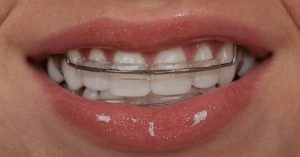
Retainers are custom orthodontic retention appliances (including removable Essix thermoplastic trays, acrylic Hawley retainers, and bonded lingual wires) engineered to stabilize teeth in corrected alignment while bone and periodontal fibers consolidate.
Essential clinical insights and evidence-based guidance for optimal oral care and treatment outcomes.
Active appliance debonding completes mechanical tooth repositioning, but the physiological retention phase is equally critical. Supracrestal gingival fibers retain elastic memory, taking up to 12 months to remodel. Without adequate retention, elastic recoil pulls teeth back toward their original positions.
Lifelong physiological forces—most notably mesial drift and gradual mandibular narrowing—continue to affect dentition throughout adulthood. Consistent nighttime retainer wear preserves orthodontic alignment indefinitely, protecting the patient’s long-term investment in their smile.
Choosing between removable thermoplastic retainers (Essix/Vivera), wire-and-acrylic retainers (Hawley), and fixed bonded lingual retainers depends on initial malocclusion severity, compliance tendencies, and individual periodontal health status.
| Retainer Variety | Material & Construction | Clinical Advantage | Maintenance Demands |
|---|---|---|---|
| Clear Thermoplastic (Essix) | Clear vacuum-formed polyurethane | Near-invisible aesthetics, full occlusal coverage | Replace every 1-2 years; clean with non-abrasive wash |
| Hawley Acrylic Retainer | Acrylic palate with stainless steel labial bow | Extremely durable, allows minor settling and adjustments | Bulkier in palate; speech adjustment required initially |
| Bonded Fixed Lingual Wire | Custom wire bonded to lingual surfaces of incisors | 100% compliance-free, continuous anterior retention | Requires floss threaders; monitor for debonded adhesive |
Yes. Teeth naturally drift forward and crowd as part of normal aging. To ensure your teeth remain in their post-orthodontic positions, nighttime retainer wear is recommended for life.
Most orthodontists prescribe full-time wear (20 to 22 hours per day) for the first 3 to 6 months, after which patients transition to wearing them exclusively while sleeping.
Contact your orthodontist immediately. In the meantime, use your removable backup retainer if available to prevent the unrestrained teeth from shifting.

After you’ve had braces, it’s essential to wear a retainer to keep your teeth in place. Several retainers are available, and your orthodontist will help

You’re probably feeling great now that you’ve completed your braces or Invisalign procedure. But don’t relax just yet – you still have to wear retainers!

If you have a broken permanent retainer, don’t worry – you’re not alone. This article will outline everything you need to know about broken retainers,

When it comes to dental care, a permanent retainer is a valuable investment. A permanent retainer is a custom-made orthodontic appliance to correct or maintain
Braces are a common orthodontic treatment that has been in use for many years. Nowadays, retainers are also used to keep teeth in their new
MY GUMS HAVE NEVER LOOKED BETTER!


by real users!